The First Contact
The first contact with AI
sometimes feels strangely familiar.
Not technically.
Historically.
That feeling
that something is changing.
Something that already feels bigger
than the tools themselves.
And at the same time,
still surprisingly broken.
The Wow Moment
This is what the early internet felt like.
The first time online.
Suddenly there was something
on the other side of the screen.
Information suddenly wasn’t static anymore.
Not local.
Not limited.
AI is having a similar moment right now.
Code in seconds.
Images from language.
Text that answers back
instead of just sitting there.
The wow moment is real.
Not because everything works perfectly.
But because you can already feel
a new interface forming underneath it all.
The Dial-Up Noise
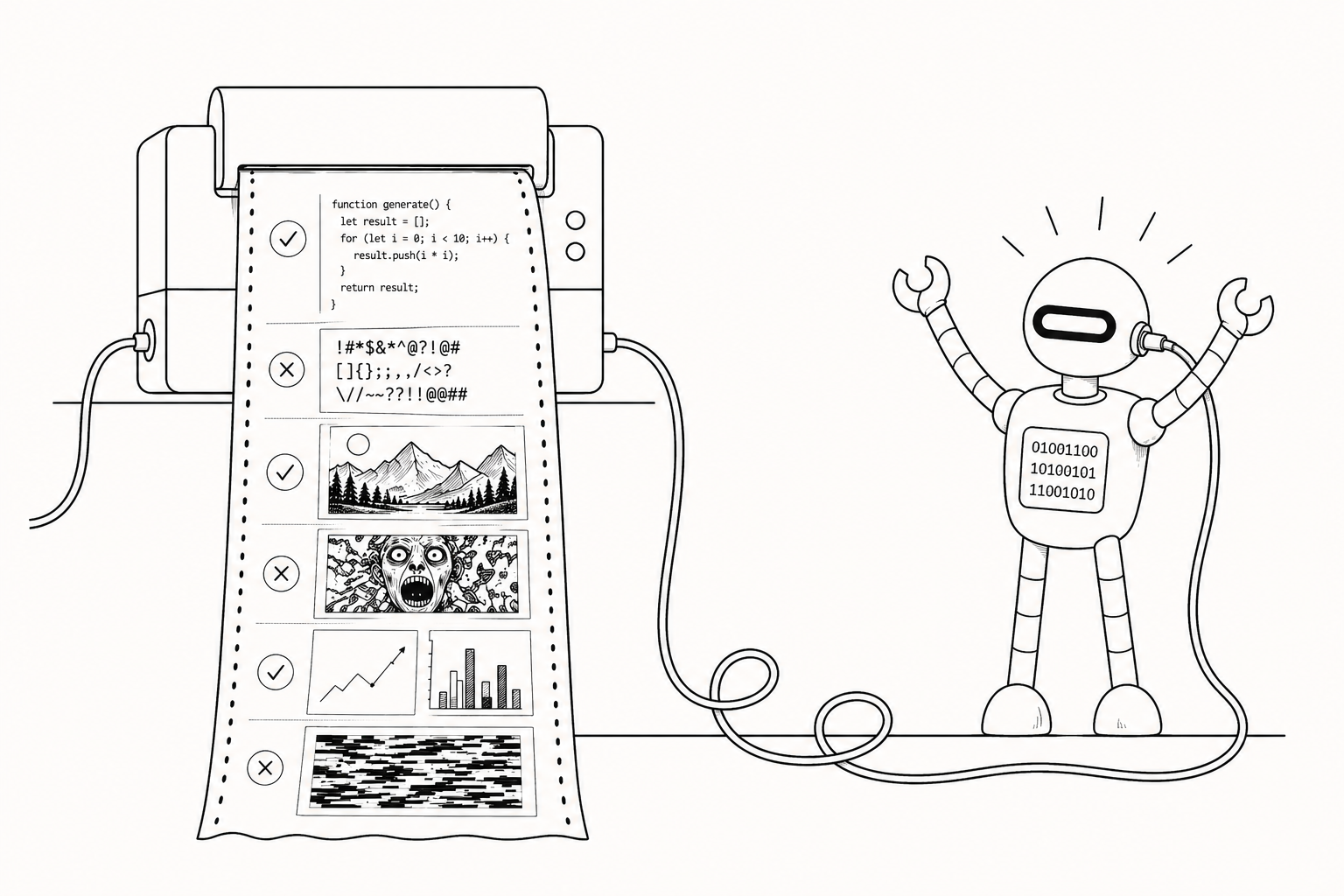
And then come the glitches.
An agent
stuck in a loop.
A code generator
producing beautifully structured nonsense.
An image model
turning humans
into slightly disturbing anatomy experiments.
A context window
that suddenly forgets
what the conversation was about twenty minutes in.
Sometimes the whole thing feels absurd.
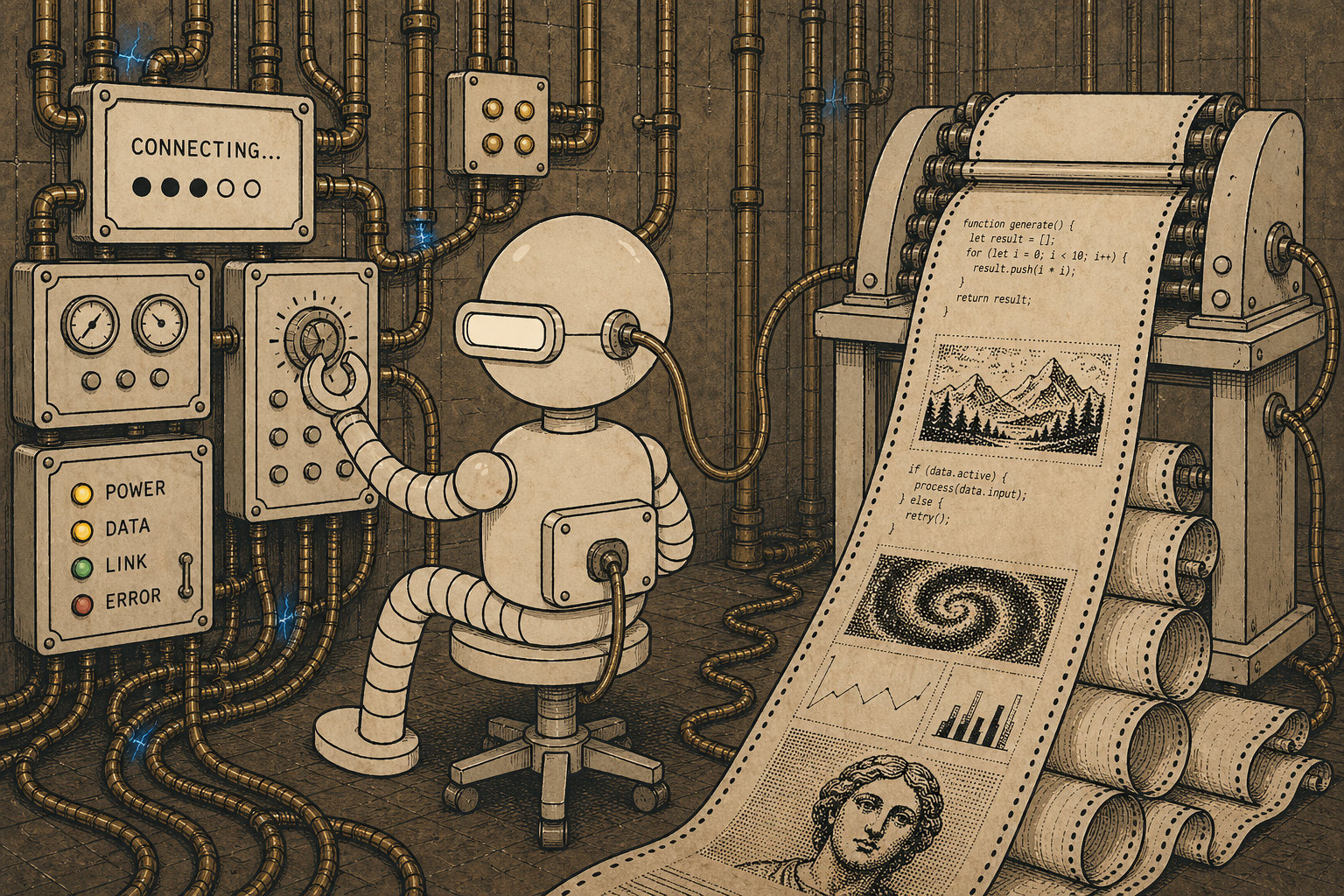
Like a modem
still refusing to connect
after the tenth reset.
That’s Not a Counterargument
The temptation is huge
to treat those failures
as proof.
“Not ready yet.”
“Can’t take it seriously.”
“Typical hype.”
But historically,
this is almost the expected pattern.
The early internet was full of friction too.
Browsers crashed.
Pages took minutes to load.
Connections dropped for no reason.
And still,
you could already tell
that there was something bigger there
than the rough edges around it.
Early Adopters
Maybe this is just part of it.
We’re using AI right now
the same way early internet users
used the web.
With excitement.
With frustration.
With absurd workarounds.
Rewrite the prompt.
Stop the agent.
Reset the context.
Generate again.
It has the same old rhythm:
Disconnect.
Reconnect.
Try again.
Not elegant.
But often good enough
to see where this might be going.
The Strange Mix
That’s the fascinating part.
This strange overlap.
On one side,
a very real glimpse of the future.
On the other,
tools behaving
like software from another decade.
Brilliant results.
Right next to grotesque failures.
A genuinely clever solution.
And beside it,
an agent
renaming the same file
for eight straight minutes.
That exact mix
is what makes this phase so interesting.
Still Connecting
Maybe we expect this phase
to be more finished
than it actually is.
Historically,
we’re probably still at the dial-up stage.
The wow moment is already here.
The reliability isn’t.
The interfaces are changing faster
than we can make sense of them.
And a lot of the people
using these tools every day
still remember what dial-up sounded like.
What That Means
Not every loop is a failure.
Not every cursed image
proves that all of this is nonsense.
Some of it
is simply what early stages sound like.
Like dial-up noise
before the connection finally goes through.
Not pretty.
But unmistakably the future.